I’m off and riding again today training for the 508! Follow my ride using my SPOT messenger page here
Get yours today at Bike Religion!

I’m off and riding again today training for the 508! Follow my ride using my SPOT messenger page here
Get yours today at Bike Religion!
So where is the “Red-Eyed Vireo” off to today? Follow my training ride for The Furnace Creek 508 on my SPOT messenger via this link.
Get your very own at Bike Religion today!
Follow me on my ride — I’ll be using a Spot GPS messenger here is the link.

Tell me what you think of this new gadget.
You can get yours at Bike Religion!
So what does a guy do when he invests $3,795 on SRM wireless training system Dura-Ace 7900 in a 53T/39T standard chainring set up and you sometimes wish you had a little more climbing gears BUT don’t want to buy a compact SRM crankset? Well you seek out the the largest manufacturer of performance bicycle accessories in North America– Blackspire Designs and source a 38T chain ring.
The quality of the 38T chaining is excellent. My shifting hasn’t been effected at all. The spread for my chainrings is now 15 teeth, well within the maximum allowable range by Shimano’s Di2 front derailleur. The new Shimano drivetrains, specifically the rear derailleur, now allows the use of an 11-28 cassette. A 38T Chain ring and and the 28T cog and you have an easier gear to climb the steeper stuff.
I would strongly recommend using the Blackspire 38T chain ring if you just need a little help with your climbing.

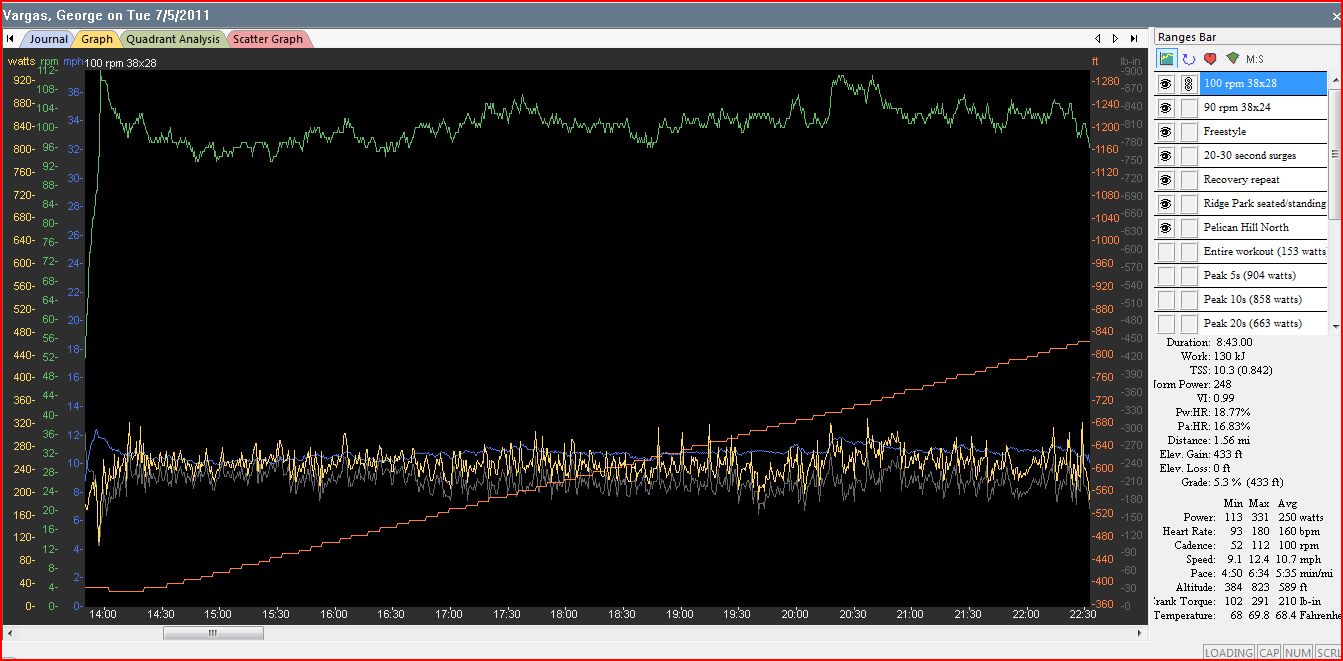
Newport Coast Drive in 38 x 28T holding a 100 Rpm average cadence. Notice the grey line (torque) average was only 210 lb-in and lower than my average power of 250 watts (yellow).
Now compare the higher torque on the bottom portion of Newport Coast Drive and you will see the torque line skyrocket on the 8ish percent grade.

What to glean from the chart above:
39 x 27– 38.4 Gear Inches
38 x 28– 36.1 Gear Inches – Smaller Gear Inches makes it easier to climb
At 8 Mph
39 x 27- 70 Rpm
38 x 28- 74 Rpm – higher cadence means a little easier to pedal to maintain the same speed up a climb
At 80 Rpm:
39 x 27 – 9.1 Mph
38 x 28- 8.6 Mph – being able to have a lower Mph while having the same cadence just another way to show it will be a lot easier.

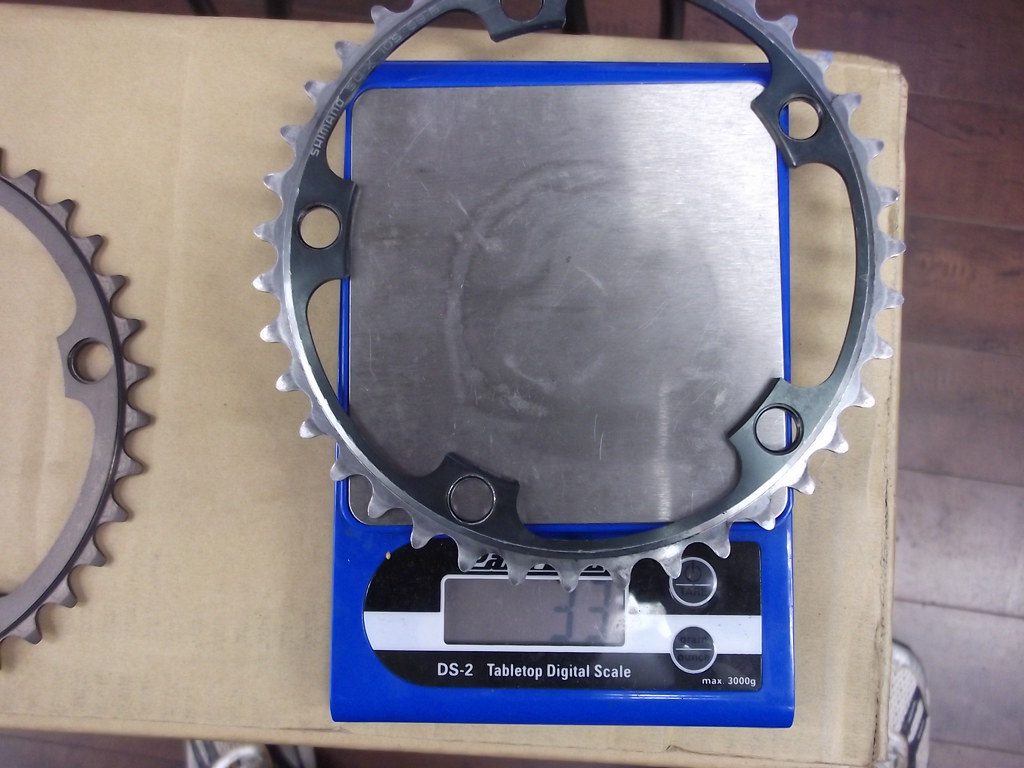 Shimano Dura-Ace 7900 39T Chain Ring
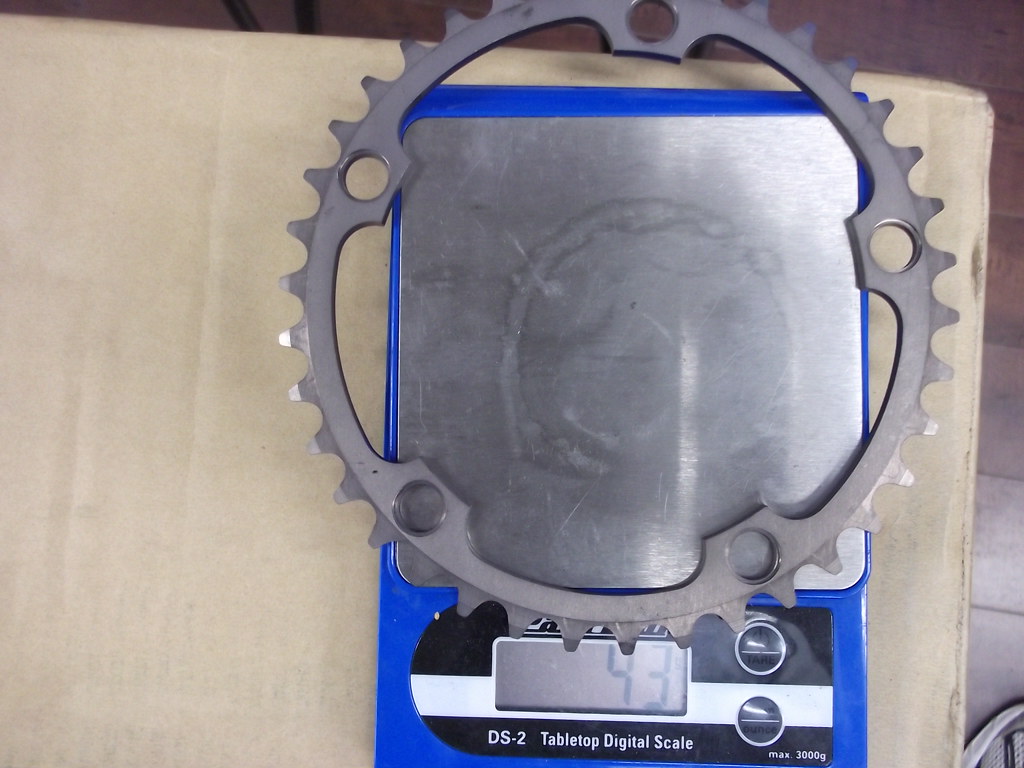 Blackspire 38T Chainring
Thanks to the good people at SPOT I’m now able to take you on a series of virtual rides with me. The SPOT connect is a satellite based system that will allow you to track me as I train for the Furnace Creek 508 via this link.
Get your very own at Bike Religion!
I would like to thank the good folks at SPOT, Brad Horton and Steve, for providing me with a demo unit of the SPOT GPS Messenger. I will be experimenting with the SPOT GPS unit on local training rides until I get out for some long endurance rides remote areas. I plan on using the SPOT when I do EC One.
Here is the link for my location and tracking information save it as a bookmark.
I spent Thursday and Friday nights at the Lake Henshaw Resort. I like using Lake Henshaw as home base for my climbing camps. Now that I live in Orange County I miss the climbing in East San Diego County. I rode four hours on Thursday with Palomar Mountain South Grade as the featured climb. On Friday, I started from Lake Henshaw and climbed Mesa Grande to Santa Ysabel, Wynola Road to Julian, Banner Grade to Yaqui Pass to Borrego Springs and then the monster climb of Montezuma Grade to Ranchita, and then rode to Warrner Springs and climbed a “secret” road to Indian Flats.
The climb out of Borrego Springs (lowest point on the elevation chart) was at 109 degrees Fahrenheit.
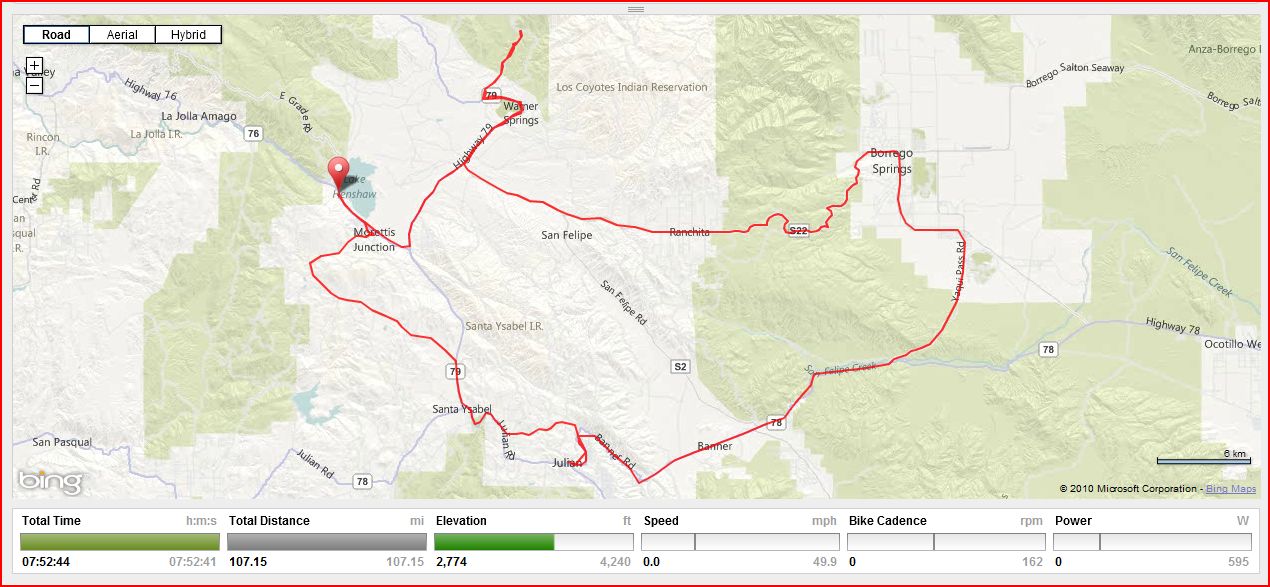
Starting and finishing at Lake Henshaw
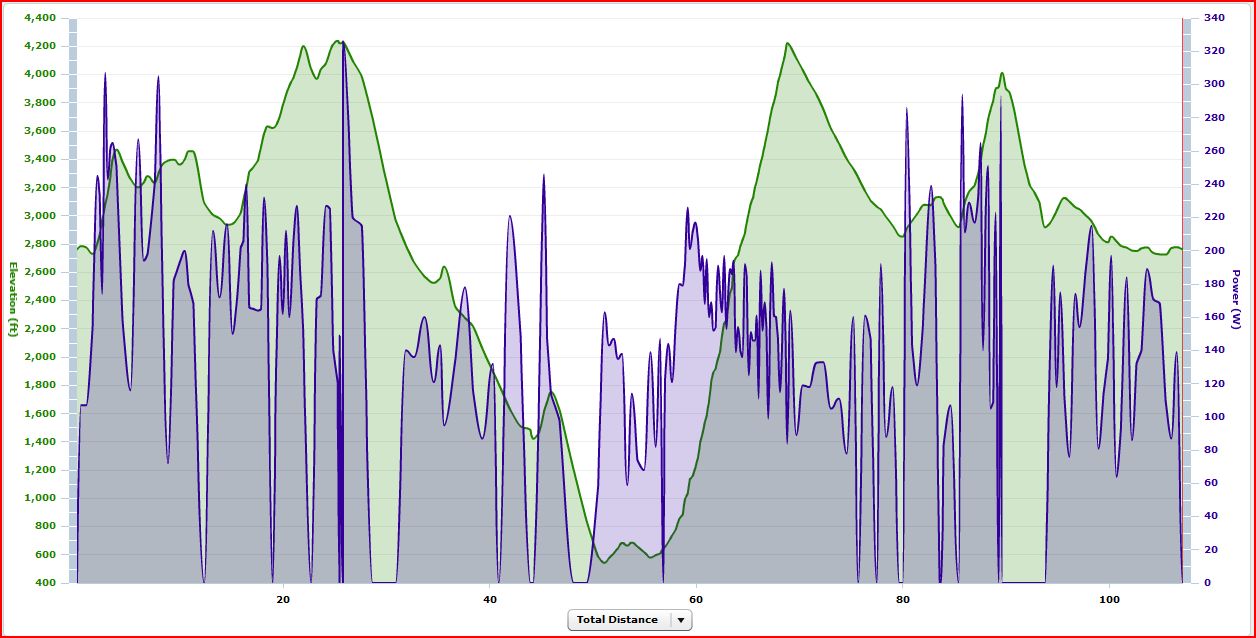
Elevation profile
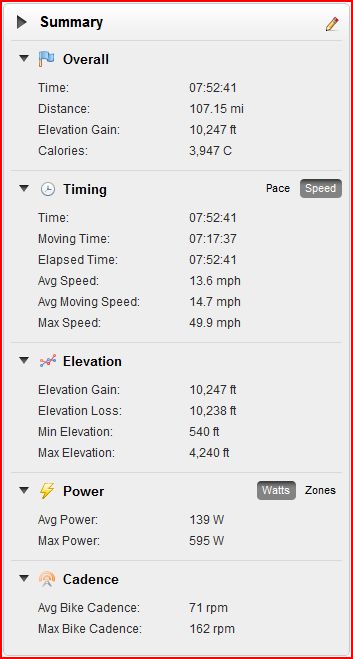
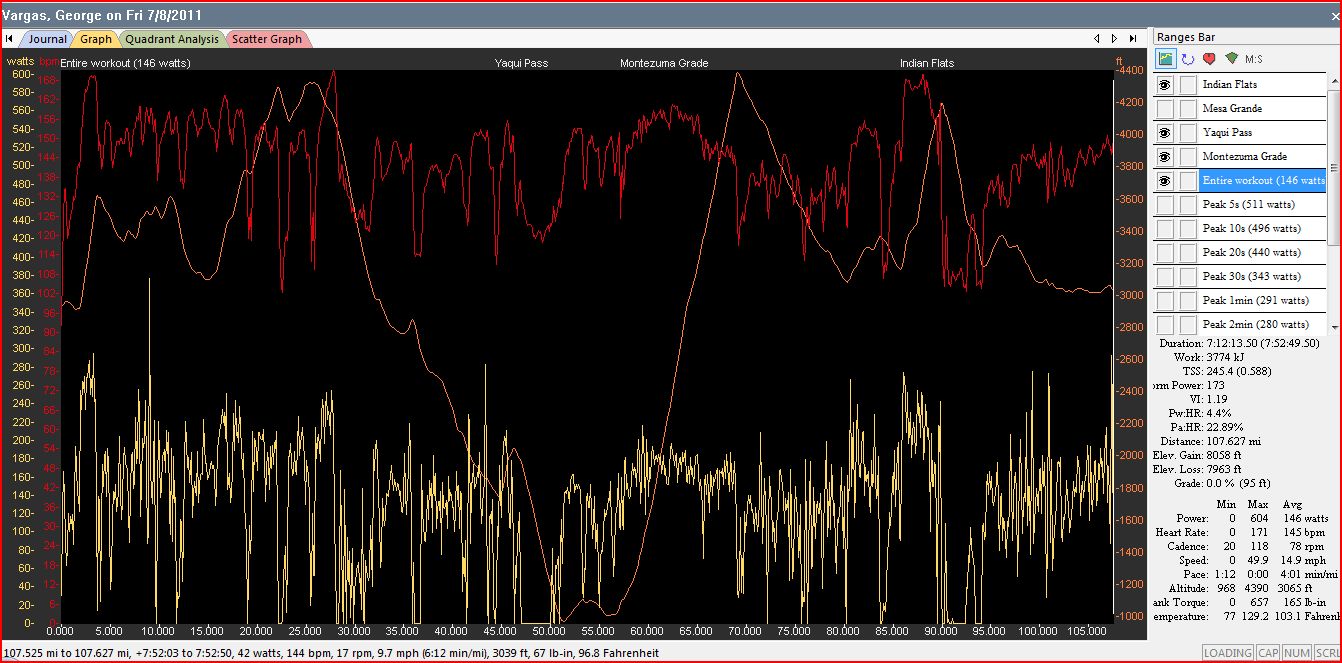
Entire training ride graph from Training Peaks download from SRM
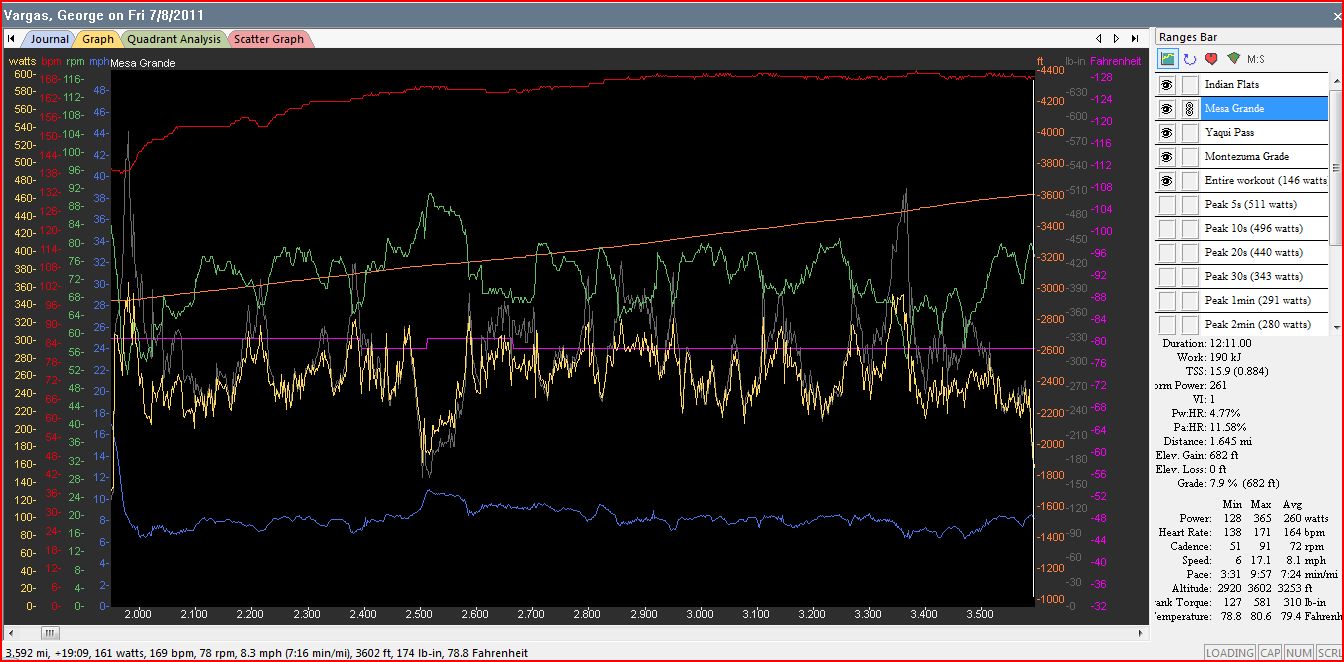
Mesa Grande Climb from Lake Henshaw off Hwy 76
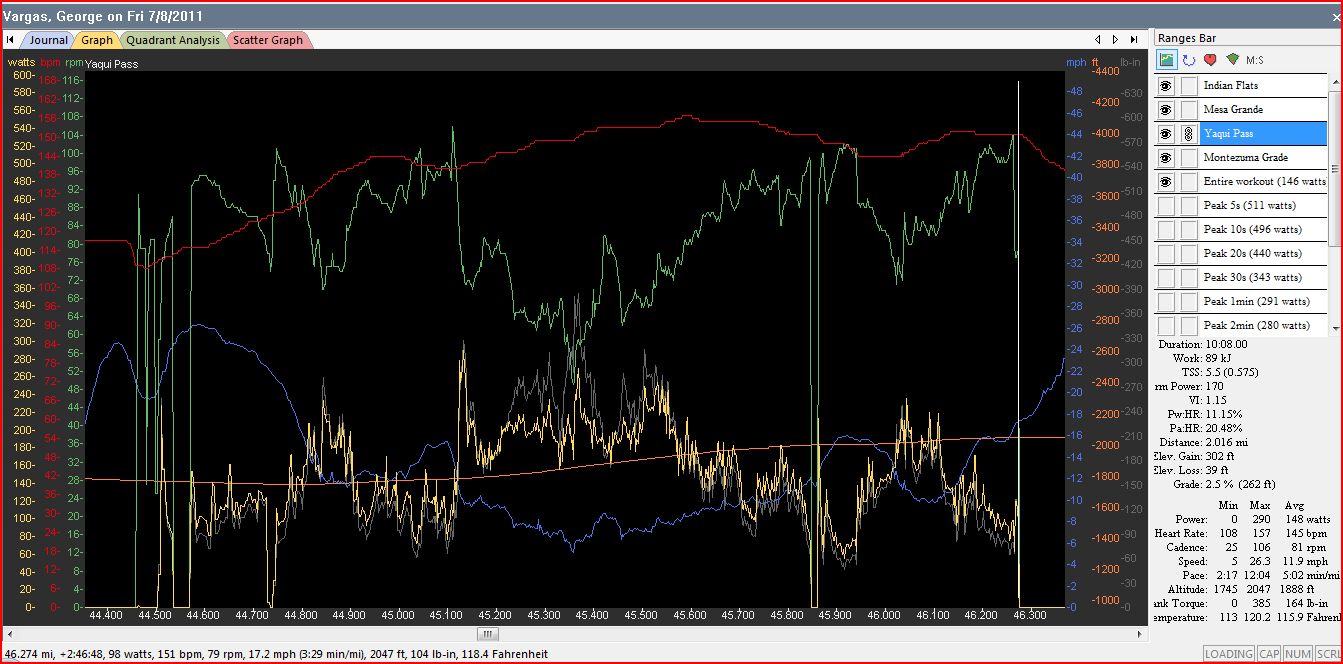
Yaqui Pass off of Banner Grade towards Borrego Springs

Montezuma Grade from Borrego Springs to Ranchita
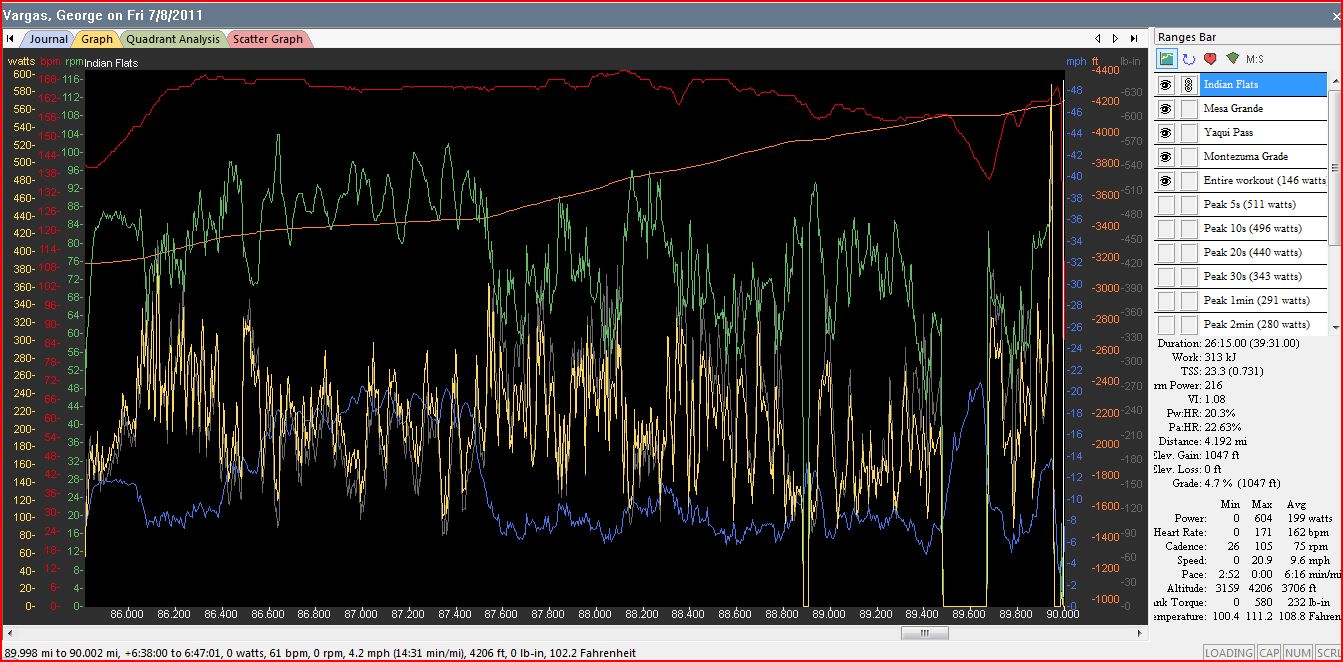
“Secret” road off of Hwy 79 near Warner Springs – Indian Flats

Please click image above for slideshow.
I have been receiving a lot of questions recently about how I prepare for the Furnace Creek 508 (508 mile 35,000 feet of climbing). I thought it would be wise to post those questions and answers here so as to create an open forum in which to discuss my training and interact with potential 508 racers. Please feel free to post your questions and I will respond to the best of my ability.
So let us begin…
Hi Geroge,
Was wondering if you do very much group rides during your training? I have been focusing a lot on solo riding as to simulate 508 conditions as much as possible. I have a lot of friends inviting me to group rides but I have been reluctent to join in, just trying to prepare as much as possible for my upcoming 508. I’m part of the killer Bees.
Thanks,
Lonnie
Lonnie,
Thank you for your question. I do group rides from time to time to test my “red-line” fitness. I find that I feel faster, if even in my head, when I do a group ride once a week. Having some training intensity is important even for an Ultra Cyclist. However, I prefer to do most of my training solo. Nothing can prepare you for the 508 like going out and riding 10-12 hours alone.
If you want to do the intensity but don’t want to deal with the egos, safety concerns or the prescribed route that comes with group rides then you should consider doing intervals. Begin with shorter intervals, say 5 minutes, until you get the discipline and focus to move on to longer intervals of 10 -20 minutes. If you find that doing a timed interval is too hard try doing hill repeats. Find a hill 5 minutes long, then a hill that is 10 minutes long and so on.
Hi, I’m riding in the 508 on a coed 4X team this year (2011) and was wondering if I could ask a few questions. How many miles per week and what kind of hill work did you do for training? Any other words of advice?
Thanks,
Lonnie (Killer Bees)
Lonnie,
Thank you again for you questions. IF I was doing a 4X relay at the Furnace Creek 508 my training would be focused on riding 2x a day for a minimum of 30 super intense miles during the week and 50 miles 2x a day during the weekend. You need to know how your body responds to doing a hard effort and then sitting around for 4- 6 hours before doing another hard effort. The 508 has only one long leg in it, Trona to Furnace Creek 99 miles. The other legs should be done in about 4 hours when you have a fresh rider on the course.
When I was training for 2007 Race Across America (RAAM) 2X relay I did three workouts a day. I had a 3 hour 45 minute 70 mile commute to work, then a 20 mile lunch time ride (super hard), then 4 hour 70 mile commute home. When my teammate DNF’d I finished RAAM on my own. You may want to be prepared, at least psychologically, to complete the 508 solo. It’s rare that a 4X relay team DNF’s but in 2009 Furnace Creek 508 the winds were so bad even 4X relay teams DNF’d. I rode solo that year and finished while riding in 60 mph gusts through Death Valley. Weather is the X-factor …you never know what to expect…be ready!
In response to your mileage and hill work question- I have a really good base of miles on my legs. I don’t have to do a lot of miles anymore. I will post my mileage per month for you and the other readers soon. I had some hard drive issues in May and I lost a lot of data. However, my work schedule and my child custody limits the amount of training I can do. I focus on quality miles. I use a power meter to make sure every workout counts. I generally do about 200 miles a week or 12 hours.
As far as hill work, I do a dedicated hill workout or hilly ride per week sometimes two.
First is in regards to training and intensity. Do you ramp up and taper like a marathon runner might do? And is there a set program you follow?
Mike,
Thank you for reading my blog and providing me with moral support!! My training plan is quite simple …it’s my life that is complicated 😉
In the “off-season” (Nov, Dec and Jan) I do longer rides with less intensity. I prepare for my first event of the season, the San Diego 200km (125 miles 8,000 feet of gain) which is held usually the first week in January. I then continue to ride longish miles through February, March and April. I will do the Spring Death Valley Double and a few climbing centuries held by AdventureCORPS. May and June I begin double workouts and shorter intervals maybe an occasional group ride. July and August I do a lot of climbing and then September is all intensity and low milieage with clubs. That usually prepares me for the Furnace Creek 508.
In regards to tapering. I have never really felt much need for tapering. Last year I did Everest Challenge (29,000 feet of climbing 2-day stage race) less than a week before the Furnace Creek 508. My legs felt amazing during the 508 so much so that I will do it again this year!
Shaun Stegosaurus Arora asks:
When you did 508 fixed what was the toughest descent? Also I struggle with gloves for steep fixie climbs. Do you have and recommendations.
Shaun,
Thank you for your question. The 508 fixed is something I’d like to erase from my pain memory bank :). It was extremely painful. I think both Towne Pass and the descent into Almost Amboy were very tough. Towne Pass is 17 miles. The descent into Almost Amboy seems just as long even though it is many miles shorter. I had to stop and take a nature break on the descent into Almost Amboy (400+ miles into the event) because of all the bouncing I was doing in my saddle. My pedaling was no longer fluid and any cadence over 120 RPM was really a chore. As far as gloves I don’t usually wear them but on the Furnace Creek 508 Fixed Gear I had a lot of hand numbness even months after the event.
You can read about all my issues here in my 2007 Furnace Creek 508 on a Fixed Gear report during the event and then there is some stuff at the end of my report. Good luck to you.
PLEASE KEEP THE QUESTIONS COMING!
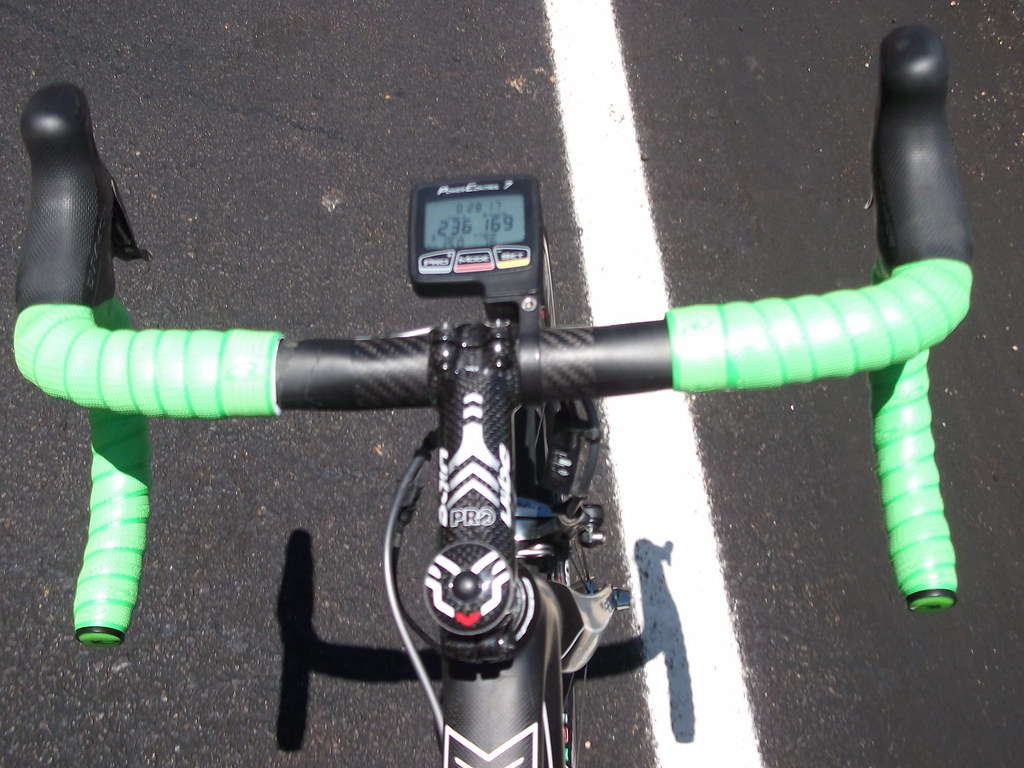
I have ridden the Lizard Skins DSP Bar Tape 2.5 for 22 hours/400 plus miles over the last two weeks. I usually don’t like to ride padded saddles, padded bar tape, padded gloves or unconventional insoles. Why? I don’t know, I simply haven’t found the need for them. I believe most hand numbness, aches and pains can be attributed to a poor fit. Any attempt to pad one or any of your three contact points (hands, feet and fanny-the exception being a good pair of bib shorts) with the bike might actually be masking a more serious issue…either the wrong size bike or an improper fit on the correct size bike.
I have my favorite saddles. That’s right saddleS. I am not tied to any one saddle in particular. I am fortunate enough to ride almost any quality saddle. I have my favorite shoes. And now I’ve found my favorite bar tape LIZARD SKINS. It is by far the most comfortable bar tape I have ever ridden!!
If you are new to my blog, I am an Ultra Cyclist. What does that mean? Well my training rides are centuries (100 miles) and my shortest events are double centuries (200 miles). While some people train all year to prepare for a century I prepare all year with centuries (weekly) for my goal event of the year. In some circles, a double century is still not an Ultra because it doesn’t go beyond 24 hours. I am one of those riders. Depending on the amount of climbing, I finish most double centuries sub 13 hours. Additionally, my perspective is a little skewed 😉 My main event of the season is the Furnace Creek 508. It is a 508 mile non-stop Ultra Cycling event through the Mojave and Death Valley deserts, traversing 10 mountain passes with a cumulative gain of 35,000 feet of climbing my personal record being 37 hours and 34 minutes (yes 37 hours without stopping).
The Furnace Creek 508 will be the perfect proving grounds for Lizard Skin bar tape. I don’t usually wear gloves until the last couple of hundred miles of the event. The roads on the last 100 miles are some of the worst roads I have ever ridden on a road bike. I can’t wait to use Lizard Skin bar tape. The tape is soft to the touch, comfy on the palms, and non-slip (think sunscreen and sweat dripping down your arms to your hands in 100 degree heat) and comes in great colors. The only downside I see right now is cleaning the tape isn’t that easy. The very thing that makes it comfy, the soft gumminess, makes it a little harder to clean. I will experiment with a few different cleaners, and towel options and update you in the future. Thus far I have used Simple Green and a white shop rag and it takes a little effort. I believe this is important to point out based on its $34.99 list price. I don’t imagine a rider changing his bar tape once a month. A rider WILL get great life out of the tape density though. However, after cleaning there is just a little grey left behind. And you know roadies, they are quite fastidious about pristine looking bar tape…among other things 😉
In the meantime I’ll keep training in comfort with my Lizard Skins DSP 2.5. I’m currently using the green tape because I am a member of the Simple Green/Bike Religion Cycling Team and I love my Swiftwick socks and cycling kit too 😉
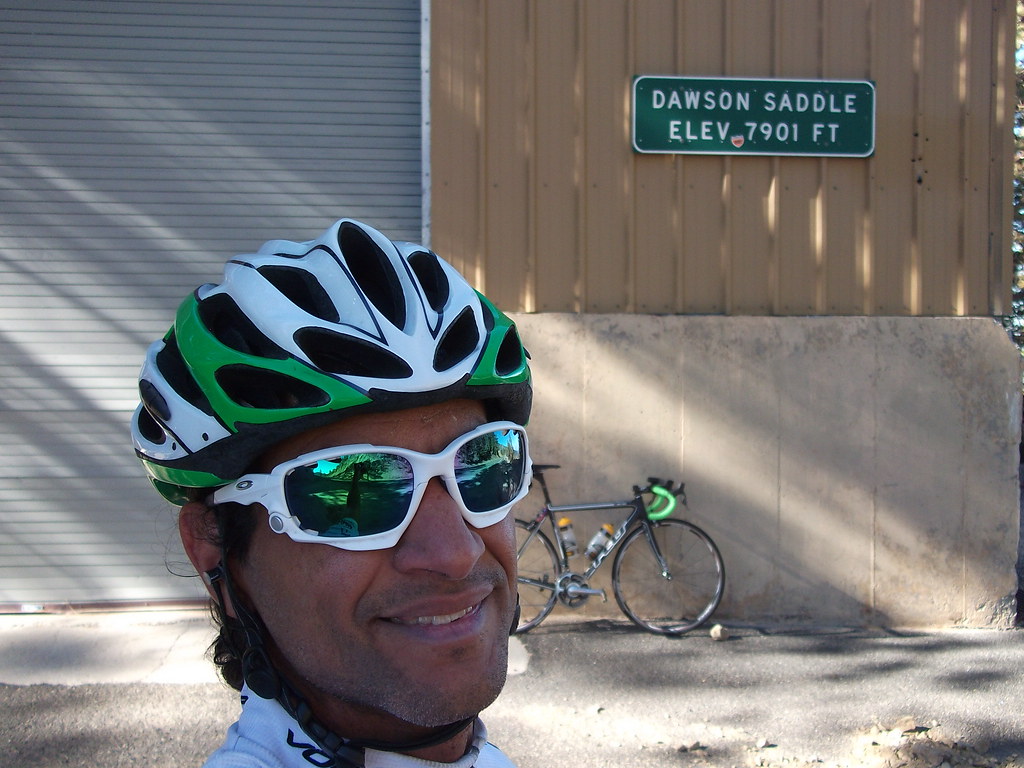
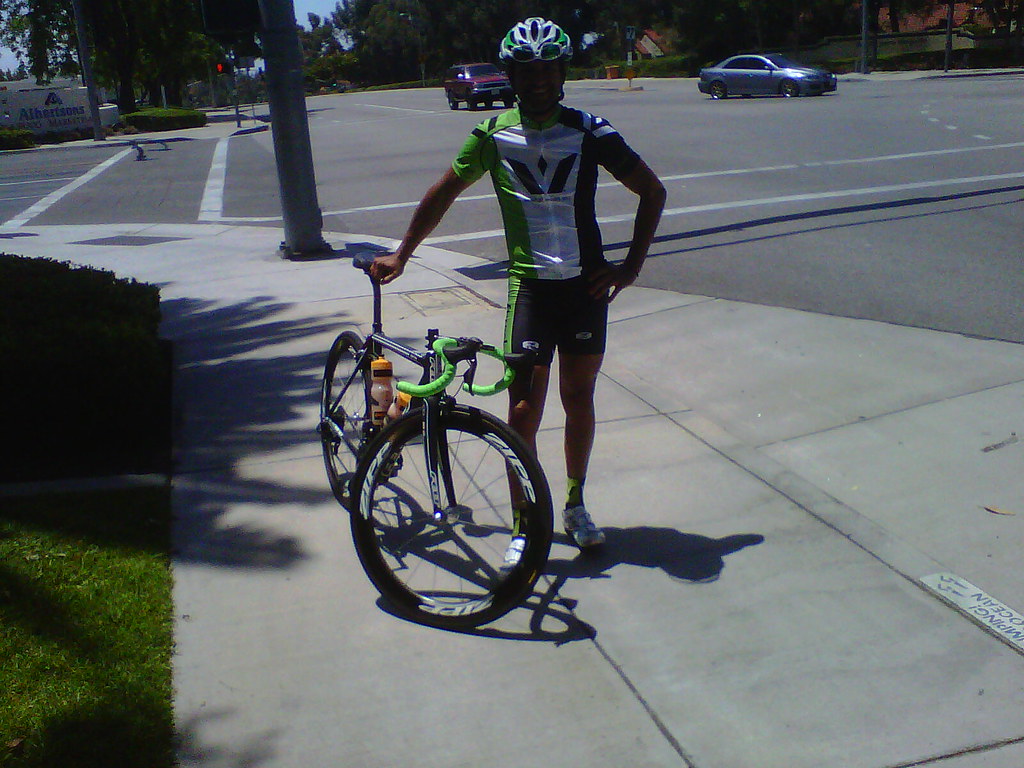
As a bonus it was lighter than the bar tape I had been using PRO black.
 Lizard Skins bar DSP 2.5 gets 4.5 on the scale of 1-5 (5 being perfect) ease of cleaning keeps it from a perfect 5.
Today I did five repeats on Newport Coast Dr. (1.5 miles 6% 450 feet of gain) and finished off with a seated/standing climb on Ridge Park (1.0 miles 8.1% 450 feet of gain). Each repeat had a different goal see below.
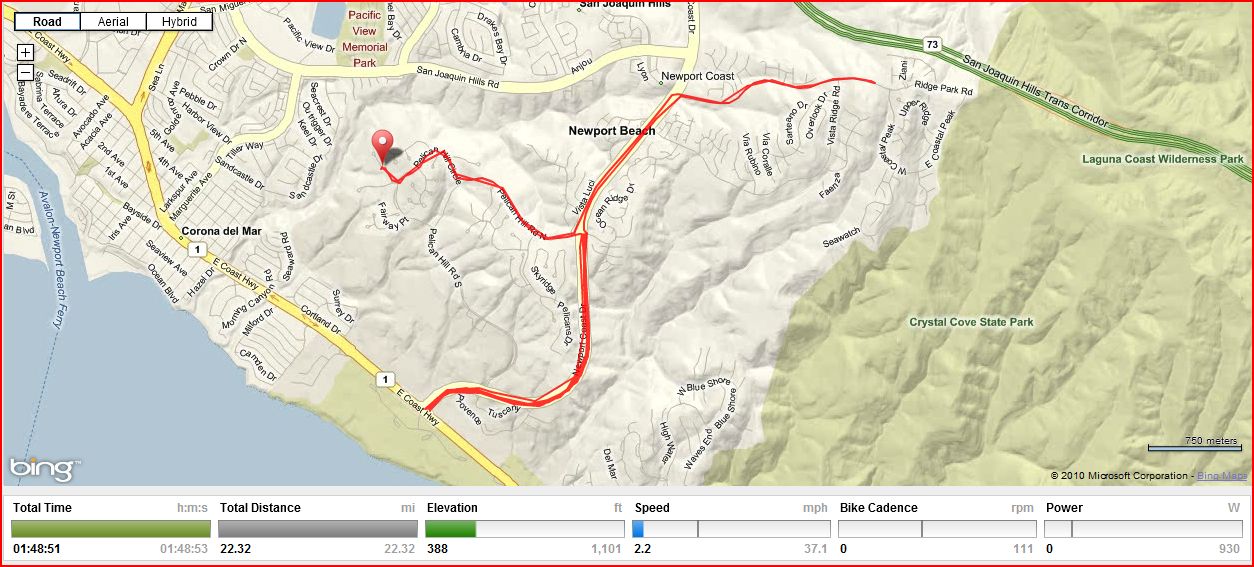
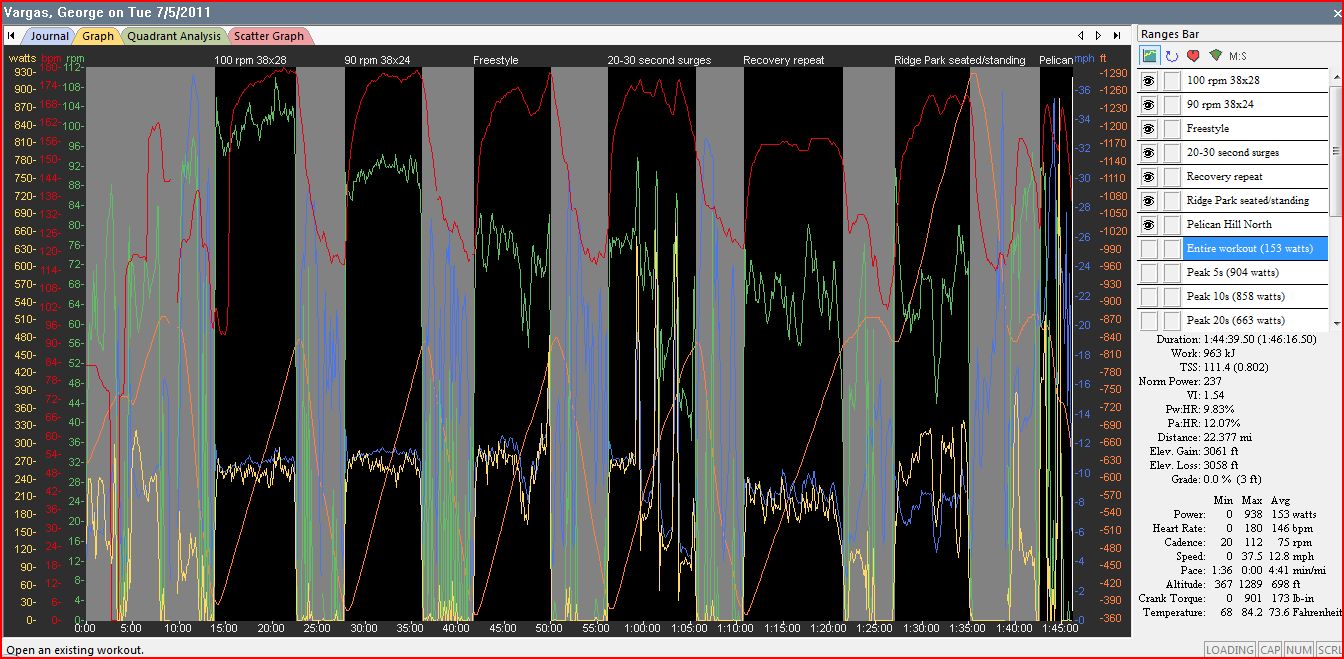
Entire workout
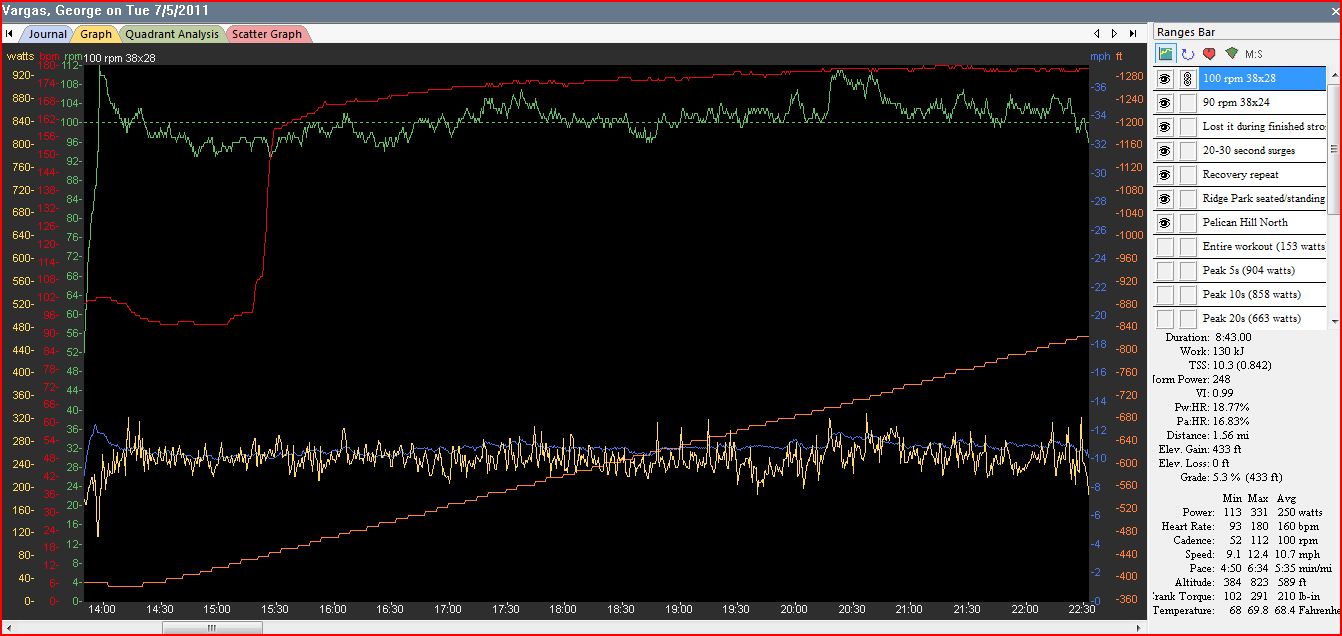
Warm up climb 38×28 goal: 100 rpm

38×24 goal: 90 rpm
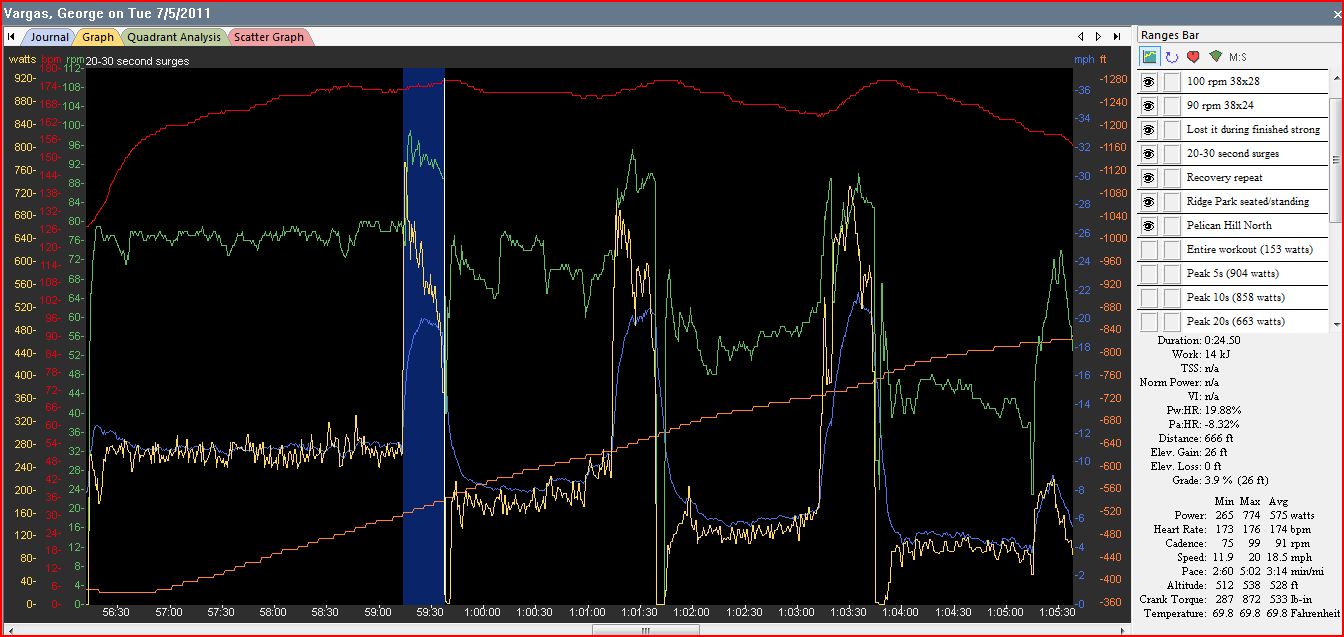
First 20 second surge
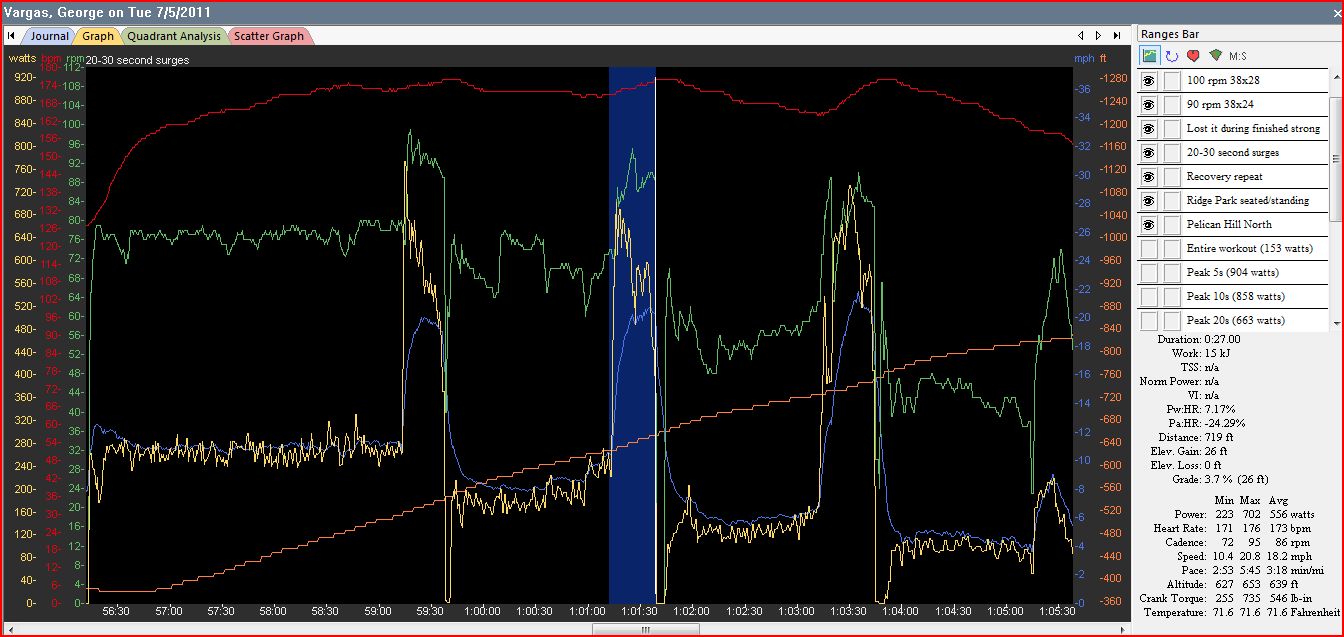
Second 25 second surge
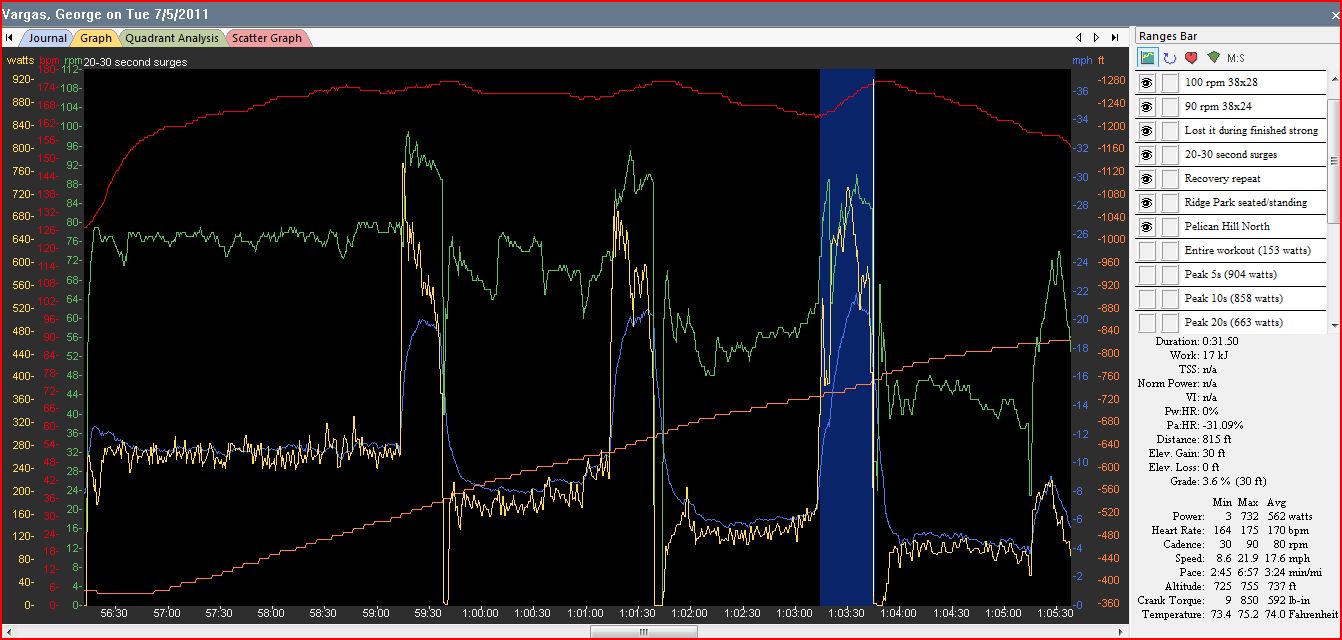
Third 30 second surge

Ridge Park seated and standing notice higher torque because of steeper grade.
 George's Epic Adventures